
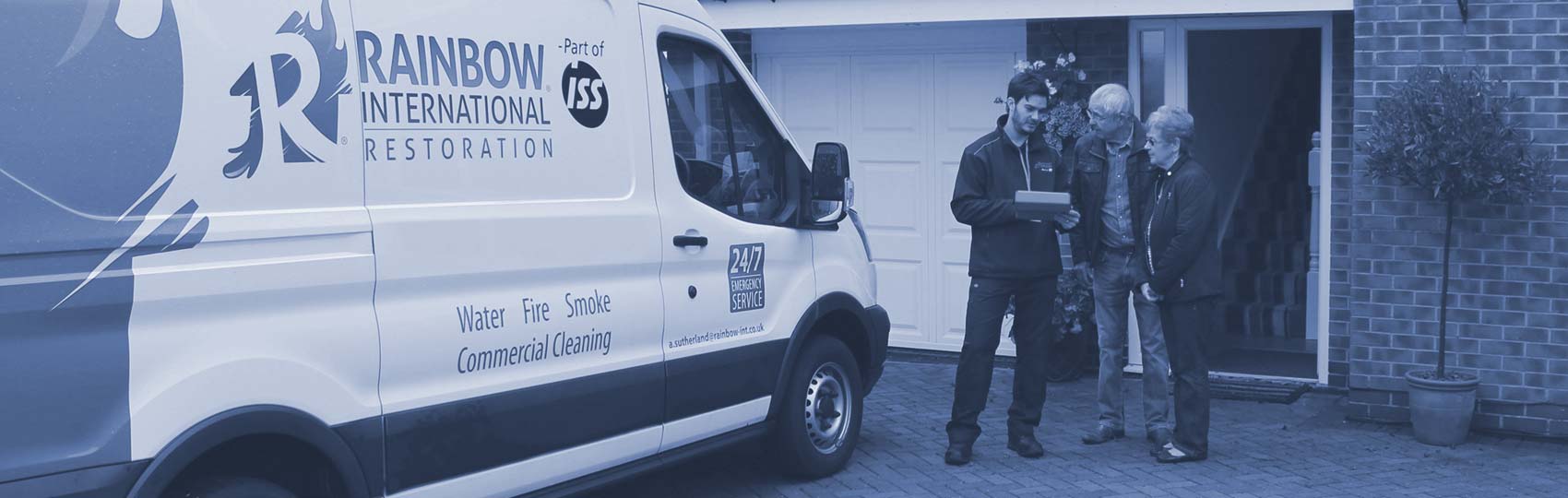
What Do Restoration Companies Do? A Typical Day in a Technician’s Life.
A day in the work life of a restoration technician is a busy one. Restoration companies service residential customers as well as businesses and corporate clients, but according to Simon Fox, director of Rainbow International in Canterbury, through it all, a technician’s main focus is providing high-quality service.
Starting the Day
Thorough attention to detail is of primary concern in the restoration industry, so the first thing most technicians do every day is synchronise and download the jobs for the day onto their iPad. They will then check their work assignments for the day and double-check them against the stock list for the vehicle to ensure that the tools, chemicals and equipment they have on board are appropriate for the jobs they have to complete that day.
And They’re Off!
To maximize efficiency and time management, technicians are usually assigned to tightly gridded areas organised by Post Codes. Thanks to modern technology, journey planning has become much simpler and more effective. Technicians’ routes primarily comprise appointments to perform regular monitor visits for the company’s restoration jobs.
However, Simon notes that other work may be assigned or called in to technicians during the day from new customers or insurance companies who are experiencing serious or urgent problems or have an urgent instruction to be attended to within 2 hours. These are often issues such as a flood or a severe escape of water that require urgent attention by our rapid response vehicles to mitigate the claim and prevent secondary damage—and these cases must be addressed with a sense of urgency 24/7.
“Existing customers are just as important as new customers, but because our new customers don’t know us, we have to make sure the first impression is a great impression,” says Simon. “We follow the Rainbow 17 Steps to Successful Restoration.” Sufficient time must be allotted to allow technicians to address unanticipated problems correctly while still meeting the expectations of their current customers.
Do I Have to Be Here for This?
Many of our customers wonder if they need to be home to interact with the technician. Though it varies by the type of job, customers generally need to be present for the initial scope, diagnosis and to discuss our recommended plan of action.
Restoration technicians will go about their normal restoration plans and monitor visits, and it’s great because customers don’t have to adjust their daily schedules; at the same time, it allows technicians some flexibility in how to work their scheduled appointments that day.
However, for new clients and current customers who have experienced a new incident, Simon says it is best if technicians meet with the clients at the source of the problem. “We want that first interview with the customers in order to see exactly what they are dealing with, what has happened and what steps have already been taken,” he says. “And we want them to see how we approach the incident.”
Pets and children, though often eager to greet us, should be kept out of the way during works. Simon recommends keeping them away from the incident and equipment that is being installed. Technicians will advise the customer on the requirements of keeping pets and children out of the area, depending on the machinery that is being used. In any event, keeping the little ones out of the way will generally keep the drying process running more smoothly and efficiently.
Science, Not Magic
While Rainbow outfit their technicians with the latest industry equipment and technology to help them organise and complete their work for the day, the job itself can still make for some long and difficult days.
Many jobs require climbing ladders or squeezing into tight crawl spaces—all difficult tasks that require stamina and dexterity. Many removal and strip out jobs also involve hard physical work using the correct tools and working practices for the challenge.
Moreover, drying a complicated case can require numerous visits. “Restoration is based on science, not magic. There are no magic wands in our industry,” says Simon, and the property may be dry with just one return visit.
A professional restoration technician will continue to pursue the problem wet areas showing excess moisture until the customer’s home is dry and we are able to issue a Certificate of Dryness, otherwise known as a Handover Certificate.
Simon likes to point out that although the work of a restoration technician can be challenging at times, the job is very rewarding. There are always people in need of restoration and cleaning, and solving the unique problems of each home has a significant impact on the residents’ quality of life.
“Most people don’t realise the job’s potential,” says Simon. The demand for skillful technicians will always be present, and the continuous call for them keeps the industry alive. Professional restoration technicians help keep homeowners happy by maintaining clean, dry homes.